



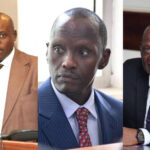

Former Nairobi Town Clerk Philip Kisia has joined a growing list of Kenyans criticising President William Ruto’s recent apology to the nation, terming it insincere and lacking in accountability.
Speaking during a podcast on Friday, May 30, 2025, Kisia dismissed the president’s apology, which was delivered at the National Prayer Breakfast held at Safari Park Hotel on Wednesday, May 28, 2025.
According to Kisia, the apology was not genuine, echoing sentiments earlier expressed by former Attorney General JB Muturi, who suggested the president should take it to Sugoi instead.
“An apology should never come with conditions. After acknowledging that there have been mistakes under your leadership, the next step is to offer a sincere apology without qualifiers,” Kisia said.
He took issue with the president’s use of phrases like ‘if you think’, saying that such language rendered the entire apology meaningless.
“That’s not how to apologise. If that’s the attitude, then keep your apology. I agree with my friend JB Muturi; take it to Sugoi,” he added.
Kisia further emphasised that a genuine apology from a head of state should include a full acknowledgement of the administration’s wrongdoings.
He pointed to acts of state brutality, heinous crimes, extrajudicial killings, and other human rights violations, which his regime has been blamed for, just as earlier advised by a former NFL player.
“The first step is to admit that mistakes were made. Then, clearly spell them out—brutality, heinous acts, murders, crimes, and extrajudicial killings. That’s what a true apology looks like,” he stated.
Kisia also praised former NFL player and guest preacher at the event, Rickey Bolden, for delivering what he termed a bold and truthful sermon.
Ruto’s apology
On May 28, 2025, during the National Prayer Breakfast at Safari Park Hotel in Nairobi, President William Ruto issued a public apology to the nation, specifically addressing Kenya’s youth.
He said, “To our children, if there is any misstep, we apologise.”

The apology also extended to neighbouring countries Tanzania and Uganda.
However, this apology has not been taken lightly by many Kenyans, including opposition figures such as Wiper Party leader Kalonzo Musyoka and DAP-K leader Eugenea, who dismissed the apology as insincere, arguing that it lacked concrete follow-through, such as compensation for the families of protest victims or justice for those who were abducted.
Senator Crystal Asige echoed these sentiments, emphasising the need for genuine behavioural change rather than rhetorical gestures.