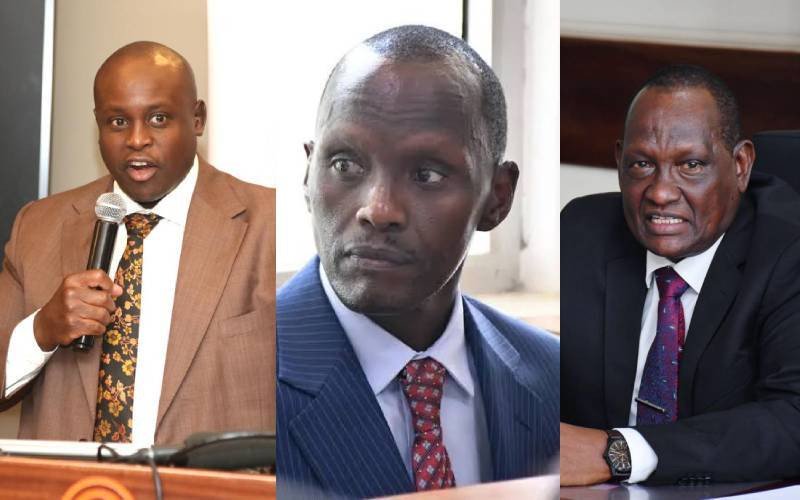






 City lawyer Vincent Lempaa Suyianka has filed an urgent petition seeking to block President William Ruto from appointing additional presidential advisors and to suspend salary payments to the 21 individuals already holding such positions.
In his petition, Suyianka argues that Kenya lacks a legal framework or regulation that defines how many advisors the President can appoint. He claims this loophole has allowed the head of state to flood the civil service with political appointees, effectively creating a parallel administrative structure.
“These individuals were brought into office without observing the values and principles that guide public service,” the petition reads. “Since the Kenya Kwanza government assumed office after the 2022 General Elections, the President has appointed a parallel civil service that duplicates the functions of the official civil service.”
Suyianka contends that these appointments are costing taxpayers billions of shillings through salaries and allowances. In his notice of motion, he asks the court to suspend salary payments to the 21 advisors until the court resolves the matter.
“Pending the hearing and determination of the petition, the 1st to 21st interested parties should be barred from receiving any salaries and allowances from the 2nd respondent,” the motion states.
Advisor Roles Created Without Legal or Public Consultation, Says Lawyer
Suyianka further argues that President Ruto filled the advisory positions through unconstitutional methods, bypassing the three officially recognized public appointment procedures. He maintains that such actions render the positions illegal and unconstitutional.
He also notes that the government failed to publish a public notice or seek public input before creating the advisory roles.
“There was a general lack of transparency in how these positions were created and how the appointments were made,” he asserts.
Data from court documents shows that the number of advisors in State House has risen sharply from seven to 17 in less than a year. The expansion reportedly includes individuals brought on through a broad-based exchange programme, raising further questions about how the President chooses and compensates his advisors.