

Despite having celebrated it for many years, few can tell the origin and the inspiration of the prayer breakfast.
The Kenya National Prayer Breakfast (KNPB) is an annual ecumenical event that brings together leaders from various sectors – political, religious, business, and civil society – to pray for the nation, promote reconciliation, and foster unity.
Held under the auspices of the speakers of the National Assembly and Senate and organised by a volunteer committee, it has become a significant platform for reflection and dialogue in Kenya since its inception in 2003. Below is detailed information about the prayer breakfast since its inception.
Origins and inspiration (1986–2002)
The KNPB traces its roots to the U.S. National Prayer Breakfast, which began in 1953 and inspired similar events globally.
The idea was introduced to Kenya in 1986 when a small group of individuals, including former Cabinet Member Isaac Omollo Okero, met for prayer in his office. This laid the groundwork for prayer gatherings among Kenyan leaders.
In 1987, Kalonzo Musyoka, then Assistant Minister and Deputy Speaker, attended the 34th U.S. National Prayer Breakfast in Washington, D.C.
The following year, in 1988, Speaker Moses Keino, intrigued by the U.S. event’s ability to unite political adversaries and non-church leaders in prayer, began exploring ways to replicate this in Kenya.
These early efforts led to the formation of small parliamentary prayer groups, such as the Boulevard Group, and meetings at Muthaiga Country Club, which included prominent figures like Kalonzo Musyoka, Raila Odinga, and Moses Keino.
The political stability following the 2002 Kenyan general elections, which marked a peaceful transition of power, provided a conducive environment for these prayer groups to consolidate their efforts.
The Bunge Fellowship and other small breakfast groups merged to organise the first official Kenya National Prayer Breakfast. Kalonzo Musyoka, who later became the Wiper Party leader, was appointed chairman of the organising committee.
Establishment and early years (2003–2010)
The inaugural KNPB took place in 2003, initially planned for the first Saturday before Madaraka Day (June 1) but rescheduled to the last Thursday of May to align with Kenya’s national calendar.
Held at a modest scale with a few hundred attendees, the event aimed to unite leaders in prayer and reflection, emphasising national unity and ethical leadership.
Over time, its popularity grew, necessitating larger venues to accommodate thousands of attendees, with the Safari Park Hotel in Nairobi becoming the traditional location.
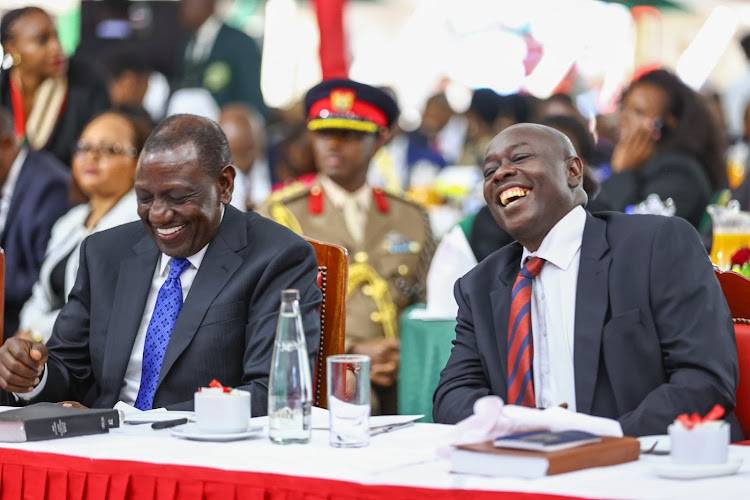
The early years saw the KNPB establish itself as an interdenominational platform, welcoming leaders from Christian, Muslim, Hindu, and other faith backgrounds.
Its core mission was to ensure that leaders recognised their responsibilities before God and fostered reconciliation across political, ethnic, and religious divides.
Notable early speakers included international figures like former Zambian President Kenneth Kaunda, Rwandan President Paul Kagame, and Zimbabwean telecom magnate Strive Masiyiwa, alongside Kenya’s Nobel Peace Prize Laureate, Professor Wangari Maathai.
Growth and prominence (2011–2020)
By the 2010s, the KNPB had grown into a major national event, drawing over 3,000 attendees annually, including political leaders, clergy, and international dignitaries.
The event became a platform to address pressing national issues such as political stability, corruption, and reconciliation, particularly in the context of Kenya’s often polarised political landscape.
For example, the 17th KNPB on May 30, 2019, highlighted the “Handshake” between President Uhuru Kenyatta and opposition leader Raila Odinga, which symbolised reconciliation after the contentious 2017 elections.
Attendees included President Kenyatta, Deputy President William Ruto, and South Sudan President Salva Kiir, though Raila Odinga was absent due to travel.
President Kenyatta called for action to match leaders’ statements, particularly on corruption, while Ruto addressed criticism of his church donations and pledged support for anti-corruption efforts.
Recent developments (2021–Present)
The KNPB has continued to evolve, adapting to challenges like the COVID-19 pandemic, which influenced logistics but did not halt the event.
The 19th KNPB, held on May 26, 2022, themed “Transitions”, reflected the upcoming general elections.
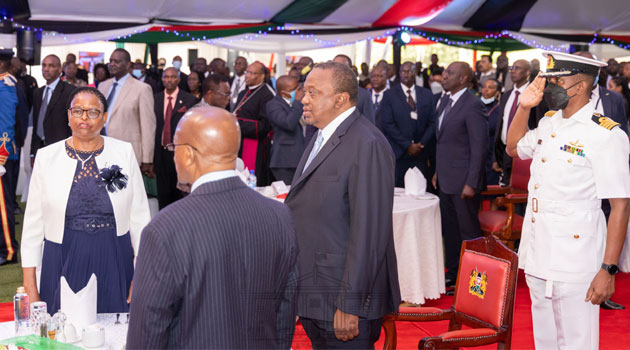
President Kenyatta urged Kenyans to be ambassadors of peace, emphasising unity despite political differences.
However, the event also highlighted tensions, as Kenyatta and Deputy President Ruto sat at separate tables, signalling their political rift.
Martha Karua, Raila Odinga’s running mate, spoke at the event, calling for competition based on ideas rather than insults.
The 20th KNPB in 2023, themed “Reconciliation”, was hosted on June 7 at Safari Park Hotel, led by President William Ruto and Deputy President Rigathi Gachagua.
The event emphasised unity amid political divisions, with opposition MPs attending despite the Azimio la Umoja Coalition’s principals, led by Raila Odinga, opting out.
In 2025, the 22nd KNPB was rescheduled to Wednesday, May 28, from its traditional Thursday slot.
Themed “Rise and Rebuild”, it was organised by Parliament and announced by National Assembly Speaker Moses Wetang’ula.
The event aims to continue fostering reflection and unity. It remains a cornerstone of Kenya’s calendar, promoting ethical leadership and national harmony.
Significance and impact
The KNPB has grown from a small gathering into a pivotal national event, fostering dialogue and reconciliation among leaders.
Its interdenominational nature ensures inclusivity, while its focus on prayer and shared values addresses Kenya’s challenges, such as political division, corruption, and ethnic tensions.
Drawing inspiration from the U.S. model, it has successfully adapted to Kenya’s unique context, becoming a platform for leaders to reflect on their responsibilities and seek divine guidance.