






Principal Secretary (PS) for the State Department for Trade, Regina Ombam, has called for concerted efforts to adapt to the global dynamics as US President Donald Trump’s trade tariffs take effect.
Appearing before the Regional Integration Committee, chaired by nominated MP Irene Mayaka, Ombam said that the new tariffs announced by Trump as part of his administration’s protectionist trade policy have triggered global economic instability that has also affected Kenya.
“The new tariffs have triggered significant global economic repercussions, leading to widespread inflation, disrupted chains and prompting retaliatory actions from major partner states,” Ombam said.
Impacts of tariffs
Members of the committee had grilled the PS on the government’s strategy to cushion the country from the impacts of the tariffs.
Further, legislators demanded answers to whether there were talks initiated with the U.S. government, and steps taken by the Kenyan government to diversify the export market.
“What level of engagement have you had with the U.S?” the Committee’s Vice-chairperson and Fafi MP Yakub Salah asked.
Talks ongoing
In her response, the PS told the committee members that the talks with the U.S. government were ongoing, adding that Kenya recently entered into export agreements with the European Union (EU), United Kingdom (UK) and United Arab Emirates (UAE).
In her closing remarks, Mayaka committed the Committee’s support for the State Department of Trade on issues requiring the intervention of the East African Court of Justice (EACJ).
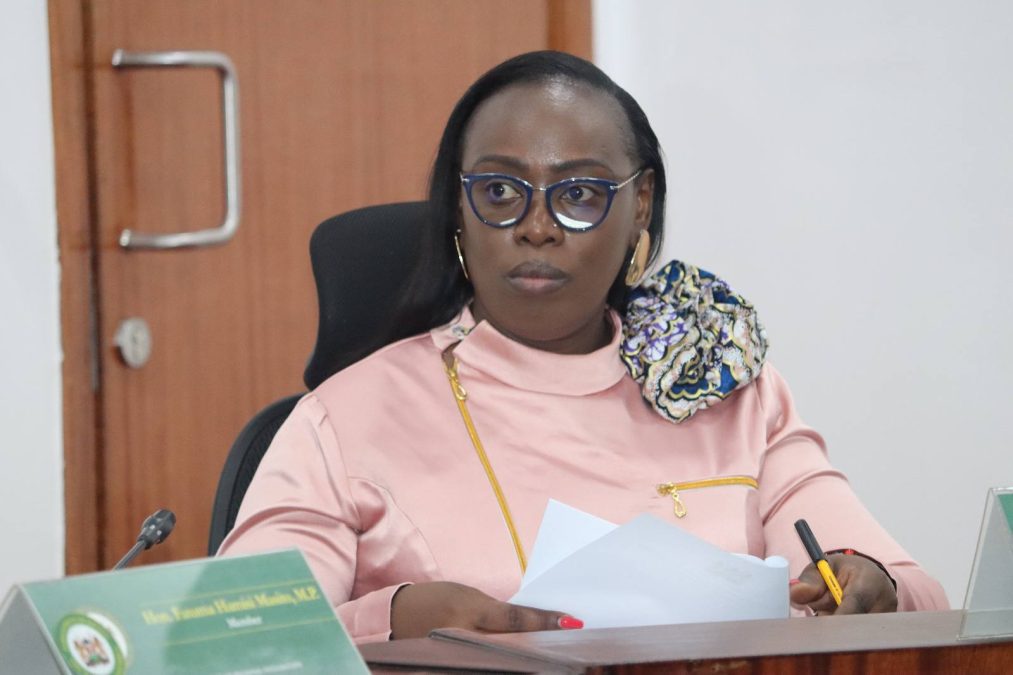
“We have taken note of issues that require the Committee’s support, more so, the issue at the East African Court of Justice. We will surely support you,” Mayaka assured.
In April, Trump introduced a 10 per cent tariff on all imports from several African countries, including Kenya.
The tariffs are projected to negatively affect trade with the US, which accounted for Ksh95 billion in imports from Kenya in 2024 alone.
The tariffs are expected to subject Kenyan products like apparel, which accounted for 72 per cent of all the exports to the US in 2024, to higher prices, making them uncompetitive in the US market.
The apparel has long enjoyed duty-free exportation from Kenya under the US African Growth and Opportunity Act (AGOA). These industries will now be faced with uncertainty, job cuts and lower production volumes if the tariffs remain.
The PS, however, remains hopeful that Kenya and the US will reach a mutually beneficial middle ground.