



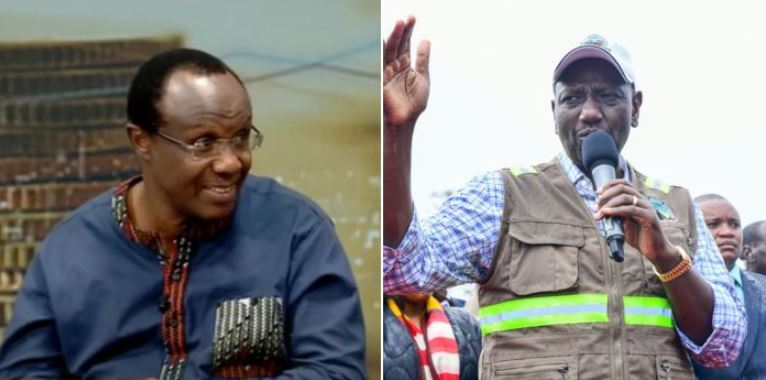
 President William Ruto’s advisory team will operate under a leaner budget of Sh478.7 million for the 2025/2026 financial year, reflecting a deliberate effort by the government to reduce costs amid growing public pressure over excessive spending.
This marks a notable drop from the Sh567.5 million allocated in the current fiscal year ending June 2024. The government has also cut the team’s previous Sh724 million budget for salaries, travel, and entertainment to Sh349.8 million. Out of this amount, Sh144 million will go to salaries and allowances—less than half of the Sh307 million spent this year.
Despite the cuts, key advisory offices under the economic docket will still consume almost half of the total allocation. These include the Office of Economic Transformation, the Council of Economic Advisors, and the Office of Fiscal Affairs and Budget Policy.
David Ndii’s Council Gets Sh92 Million
The Council of Economic Advisors, chaired by economist David Ndii, will run on a reduced budget of Sh92.7 million, down from Sh177.2 million last year. Major expenses include Sh37.6 million for rentals, Sh13.4 million for foreign travel, and Sh12.9 million for local transport.
Other operational costs include Sh8.6 million for hospitality, Sh8 million for miscellaneous expenses, and Sh3.9 million for printing and advertising. Communication services and office supplies will take up Sh3.7 million and Sh3.3 million, respectively.
Ndii’s team includes high-profile advisors such as Moses Kuria, Prof Edward Kisiang’ani, and Nancy Laibuni, who continue to guide the president on economic and fiscal policy.
Economic Transformation Office Gets Top Allocation
Leading the budget chart is Raphael Cheruiyot, who heads the Economic Transformation Secretariat. His office has received Sh98.5 million, nearly half of which—Sh49.6 million—is set aside for travel and entertainment.
Meanwhile, the Office of Fiscal Affairs and Budget Policy, led by former Treasury CS Henry Rotich, will operate on Sh31.5 million, down from Sh104.5 million last year.
Other Key Advisory Units Also Face Cuts
President Ruto has retained advisors across other critical sectors, including security, women’s rights, and climate change, though these units also face trimmed allocations.
The Office of the National Security Advisor, headed by Monica Juma, will run on Sh49.1 million, down from Sh86 million. The largest expense—Sh22.8 million—will go to office rentals.
Other costs include Sh7.5 million for hospitality, Sh6.3 million for local travel, and Sh5 million for foreign travel. Juma’s deputy is Joseph Boinett, the former Inspector General of Police.
Women’s Rights and Climate Change Offices Run on Reduced Budgets
The Office of the Women Rights Advisor, under Harriette Chiggai, has received Sh45.5 million. Of that, Sh11 million each will go toward rentals and other operating expenses, while domestic and foreign travel will cost Sh8.8 million and Sh4.3 million, respectively. The office will also spend Sh4.1 million on hospitality and Sh3.7 million on advertising.
The Council of Climate Change Advisor, led by Ali Mohamed, now has the smallest advisory budget at Sh15.2 million, a significant drop from Sh55 million. Mohamed’s office will spend Sh5.6 million on domestic travel, Sh4.5 million on hospitality, Sh3.4 million on supplies, and Sh1.3 million on foreign travel.
Public Scrutiny Over Spending Continues
Despite the overall budget cuts, Ruto’s advisory team will still spend more than Sh200 million on operations alone, excluding salaries. This has fueled public debate over whether the cost of maintaining such a large advisory team is justifiable—especially during an economic crunch.
Critics argue that the government should further scale down its non-essential spending as Kenyans face rising living costs, unemployment, and inflation.
When he appeared before the National Assembly’s Administration and Internal Security Committee, State House Comptroller Katoo Ole Metito defended the expenditure. He said the advisors had played a critical role in shaping presidential decisions, especially those targeting the cost of living.
Mt. Elgon MP Fred Kapondi questioned the number of advisors and their pay structure. “The ballooning number of advisors—it’s good to shed light on how much each is paid,” he said.
In response, Metito clarified that advisors fall under different job groups. “Some are paid like Cabinet Secretaries, others like Principal Secretaries. Advisors also come in different job groups and are assigned to which job group they come and are assigned based on their expertise,” he explained.