


The Kenya Human Rights Commission (KHRC) has called for the prosecution of security officers implicated in the extrajudicial killings of Gen Z protesters during the 2024 anti-Finance Bill demonstrations, following damning revelations in the BBC documentary Blood Parliament.
The BBC exposé, released on April 28, 2025, reconstructs the events of June 25, 2024, when protesters stormed Parliament in a historic show of defiance against the controversial Finance Bill 2024.
Using forensic video analysis, eyewitness accounts, and 3D modelling, the BBC investigation identifies the officers responsible for the fatal shootings of three young protesters: David Chege, a 39-year-old software engineer and Sunday school teacher; Ericsson Mutisya, a 25-year-old butcher; and Eric Shieni, a 27-year-old finance student.
In a strongly worded statement posted on its X account on Monday, April 28, 2025, KHRC directly contradicted President William Ruto’s earlier characterisation of the victims as criminals, instead placing responsibility for the deaths squarely on the administration.
“The BBC’s documentary, #Blood Parliament, has revealed that all three youths killed by police and a KDF officer when they entered Parliament on June 25, 2024, in a show of no confidence against William Ruto’s regime, had not committed any crime,” KHRC stated.
“They were not the ‘organised criminals’ Ruto alleged they were. It is Ruto’s regime that sent organised criminals in police and military uniforms to murder innocent Kenyans. The responsibility rests with Ruto, who must be held accountable for these deaths,” the commission added.
KHRC demanded that all officers identified in the documentary, including KDF officer John Kaboi, be arrested and prosecuted, reiterating the need for a broader investigation into the state’s handling of the Gen Z protests, including cases of enforced disappearances and other human rights violations.
“The officers identified in the documentary, including John Kaboi, the KDF officer and the police officer, along with those under investigation for extrajudicial killings and enforced disappearances that occurred during the Gen Z protests, must also face the law,” the commission stated.
Chilling findings
According to the 37-minute documentary, the first killings occurred shortly after Parliament passed the Finance Bill.
Chege and Mutisya were shot dead on Parliament Road by a police officer captured on video kneeling as he fired into the crowd.
The situation escalated when protesters breached the parliamentary chambers — a first in Kenya’s post-independence history.

While attempting to flee through the compound’s perimeter fence, Shieni was shot in the head and died instantly.
A forensic breakdown of footage revealed that Shieni’s shooter was a member of the Kenya Defence Forces (KDF), fueling concerns over the militarisation of civilian policing and the state’s use of lethal force against unarmed demonstrators.
National outcry
The BBC documentary has reignited public anger, with leaders and citizens alike demanding justice.
Manyatta MP Gitonga Mukunji on Monday challenged the government to release its own findings on the deaths, criticising the state’s silence nearly a year after the bloodshed.
Speaking on April 28, 2025, Mukunji condemned the lack of a meaningful investigation and demanded compensation for the families of the victims.
“The blood of those young people, and I want to condemn the fact that there has not been any significant investigation to establish why these youth were killed. I want to call upon the government, if they have an alternative documentary of what transpired, to release it,” he said.
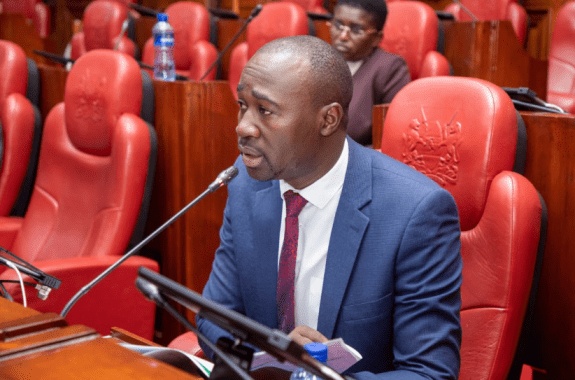
Mukunji described the killings as inhumane, noting that the victims were merely exercising rights protected by the Constitution.
He also expressed disappointment that it had taken a foreign media house to ask hard questions.
“It is also a shame that the BBC had to release a documentary to ask the hard questions. Those young people who died were not fighting for themselves; they were fighting for everyone,” he stated.
Prominent journalist Willis Raburu also weighed in, posting an emotional tribute on X.
“Watching Blood Parliament left me hollow, shaken, and profoundly heartbroken. Angst, tears, pain. Each scene, each face, sears into your soul: the young, struck down while demanding dignity, justice, and change,” Raburu wrote on Monday.
“The blood spilt on those streets isn’t just history. It’s a living wound, a call to conscience for every Kenyan. A call that demands we remember, we honour, and we continue the fight for a country where freedom is not a death sentence. We can not forget. RIP to our heroes,” he added.